Crochet Flower Hot Pads for a Brighter Kitchen Table
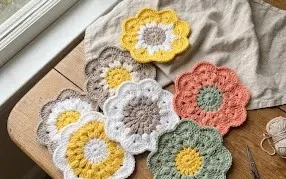
Thick cotton stitches and raised petals give a floral hot pad a useful shape with a cheerful, garden-inspired look. It can sit on the table beneath a warm casserole, protect a counter from a saucepan, or add a handmade touch to a kitchen shelf. Beginners can practice working evenly around a motif, while experienced crocheters can enjoy choosing colors and making a quick, practical gift. These patterns use familiar crochet stitches and simple shaping to build a flower-like design with texture you can feel. As you work, you’ll learn how stitch placement creates petals and how a firm fabric helps the finished pad hold its shape. Choose cotton yarn that can handle heat, check your gauge as the motif grows, and make a matching pair for your own kitchen or a friend’s housewarming.
Why You’ll Love This Pattern
This square cotton dishcloth is worked in single crochet, so the fabric is sturdy, absorbent, and easy to check as you go. A straight-sided shape keeps the pattern simple: there are no increases, decreases, or seams to manage.
It is a useful first project for practicing even tension and counting stitches. The repeated rows also make it a good project to pick up for short stretches, and one cloth uses a modest amount of yarn, so a partial ball may be enough.
The finished cloth works for washing dishes or wiping counters, and a set of two or three makes a practical handmade gift. Here is an example of the kind of feedback a maker might share after finishing it:
The rows were easy to follow, and I liked having a useful project to practice keeping my edges straight.
— Claire, beginning crocheter
Pattern Overview & Skill Level
- Skill Level: Beginner. You need to know how to chain and single crochet.
- Approximate Time: About 2–3 hours, depending on your pace and how often you pause to count.
- Construction: The dishcloth is made flat in rows, working one single crochet into each stitch across. The turning chain does not count as a stitch.
- Finished Dimensions & Sizing: About 7.5 × 7.5 in (19 × 19 cm) with the yarn and gauge listed below. Cotton tension varies, so check your measurements after several rows.
Materials & Supplies Needed
- Yarn: About 60 yd (55 m) of worsted-weight cotton yarn, category #4, in one color. Cotton is absorbent and handles frequent washing well.
- Hook: 5.0 mm (US H-8). Use the hook that gives you a firm but flexible fabric.
- Notions: Tapestry needle for weaving in the ends, scissors, and a ruler or tape measure. A stitch marker is optional for marking the first stitch of a row.
- Gauge: About 16 single crochet stitches and 18 rows measure 4 in (10 cm) after washing and drying. Matching gauge helps the cloth reach the stated size and keeps yarn use close to the estimate.
- Substitutions: Worsted-weight cotton in a similar thickness is the closest substitute. Cotton-linen blends can make a slightly drapier cloth. Acrylic is less absorbent and may feel different in use. A thinner or thicker yarn changes the finished size and may require a different hook; check the care label before using a substitute for a kitchen cloth.
Stitch Guide & Abbreviations (US Terms)
- ch = chain.
- sc = single crochet: insert the hook into the stitch, yarn over and pull up a loop, yarn over and pull through both loops.
- st = stitch.
- sts = stitches.
- rep = repeat.
The turning chain at the beginning of each row does not count as a stitch. Work the first single crochet into the first stitch, directly below the turning chain. This keeps the side edges straight.
Step-by-Step Pattern Instructions
Dishcloth
Use the 5.0 mm hook and worsted-weight cotton. Keep your loops even and avoid pulling the turning chain tight. The stitch count is 30 on every row.
- Foundation: Ch 31. The chain at the hook is the turning chain; the remaining 30 chains form the foundation for Row 1.
- Row 1: Sc in the second ch from the hook and in each ch across. Ch 1 and turn. (30 sts)
- Row 2: Sc in each st across. Ch 1 and turn. (30 sts)
- Rows 3–30: Rep Row 2 for each row, working 30 sc across and making ch 1, turn at the end of every row. (30 sts in each row)
Finishing
After Row 30, fasten off, leaving a tail long enough to weave in securely. Thread the tail onto a tapestry needle and weave it through several stitches on the wrong side, changing direction once so it is less likely to work loose. Weave in the starting tail in the same way.
Lay the cloth flat and measure it. If it is slightly uneven, dampen it, smooth the edges into a square, and let it dry flat. Avoid stretching the corners sharply, which can distort the rows.
Care & Washing Instructions
- Wash cotton dishcloths in warm water, up to about 40°C (104°F), with similar colors; follow the yarn label if it gives a lower temperature.
- Dry flat when possible, or tumble dry on low if the yarn label allows it.
- Reshape the cloth while damp and let it dry flat; blocking is optional for this everyday item.
Pro Tips & Common Mistakes to Avoid
- Keep the starting chain relaxed. A tight foundation can pull the first row inward; if that happens often, try making the chain with a hook one size larger, then switch back for the rows.
- Count the 30 stitches at the end of each row. Place a marker in the first stitch if it is easy to miss, especially when turning and working into the first stitch beside the chain.
- Weave in both ends on the wrong side and pass the needle through several stitches before changing direction. Trimming the tail immediately after one pass can let it loosen in the wash.
- For a wider or narrower cloth, change the foundation chain while keeping one fewer single crochet than the number of chains. More stitches and rows use more yarn and produce a larger cloth; changing the hook alone also changes the fabric density.
Frequently Asked Questions
Can I use a different yarn fiber?
Yes. Worsted cotton is recommended because it absorbs water and tolerates regular washing. A cotton blend may work, but check its care instructions. Acrylic is less absorbent and may not be as useful for wiping dishes.
How can I make the dishcloth larger or smaller?
Change the foundation chain to set the width, then work more or fewer rows to set the length. Keep one fewer single crochet than the number of chains, and expect a larger cloth to use more yarn and take longer to finish.
Is this pattern suitable for a first crochet project?
Yes, if you can make a chain and single crochet. The main thing to watch is the first and last stitch of every row. Count 30 stitches before turning so the edges do not gradually narrow or widen.
Can I sell dishcloths made from this pattern?
Check the designer’s terms before selling finished items, and follow any credit or usage rules they give. This guide does not grant permission to reproduce or sell the written pattern itself.
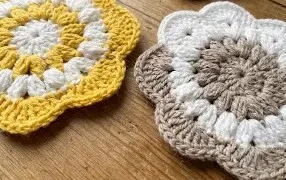
A finished floral hot pad brings a little color to the kitchen and gives you a sturdy spot for a warm pan or serving dish. For a simple variation, change the petal color while keeping the center and outer round in a neutral shade, or add another round if you want a slightly larger pad. Use cotton yarn and keep the stitches firm so the fabric stays dense enough for everyday use. When yours is ready, share a photo on Pinterest or social media and show the colors you chose. If you enjoyed making this project, explore more free crochet patterns on the blog for practical home pieces and thoughtful handmade gifts.