Easy Crochet Lamb Amigurumi Free Pattern for Beginners
Soft yarn gives a crochet lamb its woolly look, while a rounded body and small floppy ears make the finished toy feel sweet and welcoming. This amigurumi project suits beginners who are ready to practice working in the round, as well as gift makers and anyone who enjoys handmade touches around the home. The steady rhythm of single crochet makes each section satisfying to build, and simple shaping brings the lamb together without complicated stitch patterns. You’ll learn how to keep your stitches tight enough to hold the stuffing, shape the main pieces, and finish the face with embroidered details. Choose a gentle cream or white yarn for a classic lamb, or pick a soft pastel for a playful version.
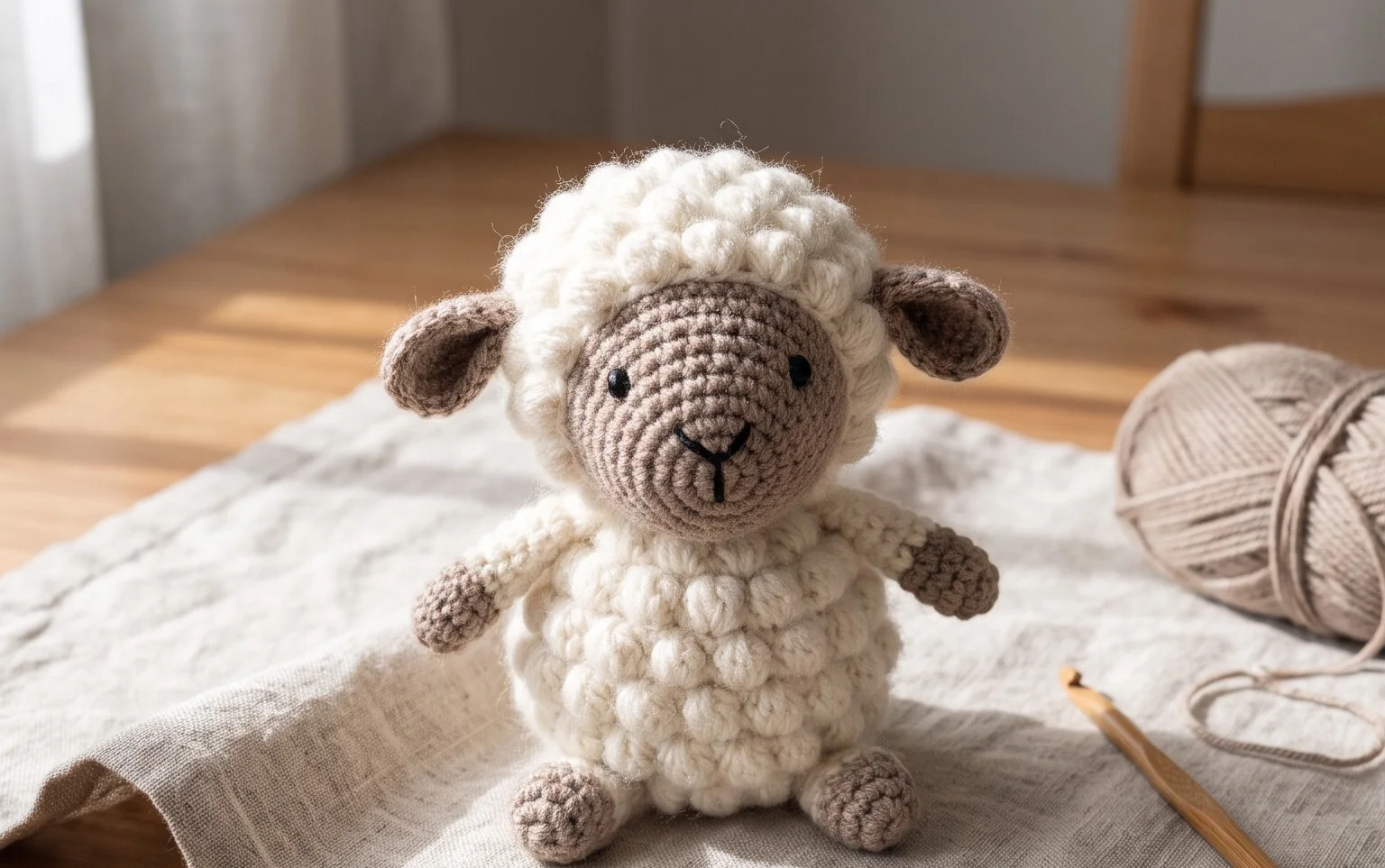
Why You’ll Love This Pattern
A square of worsted cotton makes a useful dishcloth with a simple, firm single-crochet fabric. This beginner-friendly pattern uses one stitch throughout, so you can focus on keeping the edges straight and the tension even. It takes about two to three hours to make, and the small size makes it easy to finish in a single sitting.
The cloth is practical for everyday kitchen use, and a ball of cotton left over from another project may be enough. Its plain surface also makes it a good first project for practicing a foundation chain, turning at the end of a row, and counting stitches without managing shaping.
The rows were easy to keep track of, and the cotton made a sturdy cloth. I finished it in an afternoon and use it by the sink.
— Maya, beginner crocheter
Pattern Overview & Skill Level
- Skill Level: Beginner. You need to know how to chain and single crochet.
- Approximate Time: Two to three hours, depending on your pace and tension.
- Construction: The cloth is worked flat in rows from the lower edge upward, then finished with the yarn end woven in. There is no seam or separate border.
- Finished Dimensions & Sizing: About 8 inches wide by 7.5 inches tall after washing and drying flat. Small differences in gauge can change the finished measurements.
Materials & Supplies Needed
- Yarn: About 100 yards of worsted-weight cotton yarn, category #4, in one color. Cotton absorbs water and holds up well to regular washing.
- Hook Size: 5.0 mm / H-8 crochet hook. Use the hook that gives you the stated gauge and a fabric that feels firm but not stiff.
- Notions: Tapestry needle for weaving in the yarn ends, scissors, and a ruler or measuring tape. A stitch marker is optional for marking the first stitch of a row.
- Substitutions: A cotton-linen blend can make a slightly drapier cloth. Choose a yarn that can tolerate frequent washing. Acrylic is less absorbent and may feel different in use. Changing yarn weight or hook size changes the finished size, so check your gauge before starting.
Gauge: 15 single crochet stitches and 16 rows measure 4 inches square. Make a small swatch in single crochet, wash it as you plan to wash the finished cloth, and measure it flat. If you have more stitches per 4 inches, try a larger hook; if you have fewer, try a smaller hook.
Stitch Guide & Abbreviations (US Terms)
- ch: Chain. Yarn over and pull through the loop on the hook.
- sc: Single crochet. Insert the hook into the stitch, yarn over and pull up a loop, then yarn over and pull through both loops on the hook.
- st(s): Stitch or stitches.
The turning chain does not count as a stitch in this pattern. Work the first single crochet of each new row into the first stitch, not into the turning chain.
Step-by-Step Pattern Instructions
Dishcloth
- Foundation: Ch 31. Keep the chain relaxed so the lower edge does not pull in.
- Row 1: Sc in the second ch from the hook and in each ch across. Turn. (30 sts)
- Row 2: Ch 1, sc in each st across. Turn. (30 sts)
- Rows 3–10: Repeat Row 2 eight times. Each row has 30 sts.
- Rows 11–20: Repeat Row 2 ten times. Each row has 30 sts.
- Rows 21–30: Repeat Row 2 ten times. Each row has 30 sts.
After Row 30, the piece should measure about 8 inches wide and 7.5 inches tall if your gauge matches. If it is noticeably shorter or longer, check that you have completed 30 rows and compare your row gauge before finishing.
Finishing
Cut the yarn, leaving a tail of about 6 inches. Pull the tail through the final loop and snug it gently. Thread the tail onto a tapestry needle and weave it through several stitches along the edge, changing direction once so it stays secure. Weave in the foundation tail the same way. Avoid pulling the tails so tightly that the corners bunch.
Care & Washing Instructions
- Wash cotton in warm water, up to 40°C (104°F), with similar colors; follow the yarn label if it gives a lower limit.
- Lay flat to dry, smoothing the cloth while it is damp rather than stretching it.
- Reshape the edges by hand after washing; light blocking is optional if the cloth has become uneven.
Pro Tips & Common Mistakes to Avoid
- Keep your starting chain loose. A tight chain makes the bottom edge narrower than the rows; if needed, make the chain with a hook one size larger, then switch to the 5.0 mm hook for Row 1.
- Count the stitches in every row, especially the first and last few stitches. If the cloth starts narrowing, you may have missed the last stitch beside the turning chain.
- Use a stitch marker in the first stitch of a row if the edge is hard to see. Move it up as you work, and remember that the turning chain does not count.
- For a larger cloth, add stitches to the starting chain and work additional rows to match the new width. More stitches and rows use more yarn; check the size as you go instead of relying only on the original yardage estimate.
Frequently Asked Questions
Can I use a different kind of yarn?
Yes, but cotton or a cotton blend is a good choice for a dishcloth because it absorbs water and can be washed often. A different fiber may change how absorbent, stretchy, or soft the finished cloth feels. Follow its care label.
How can I make the dishcloth larger or smaller?
Change the foundation chain to adjust the width, keeping an even stitch count, then add or remove rows to adjust the height. A larger cloth uses more yarn, while a smaller one uses less. Check your gauge because changing hook size also changes the measurements.
Is this pattern suitable for a first crochet project?
Yes. It uses only chains and single crochet, with no increases, decreases, or joining. Count each row as you work so you can catch a missed stitch before the edges become uneven.
May I sell dishcloths made from this pattern?
Check the designer’s terms before selling finished items, and follow any credit or selling limits stated there. This tutorial provides no separate permission beyond those terms.
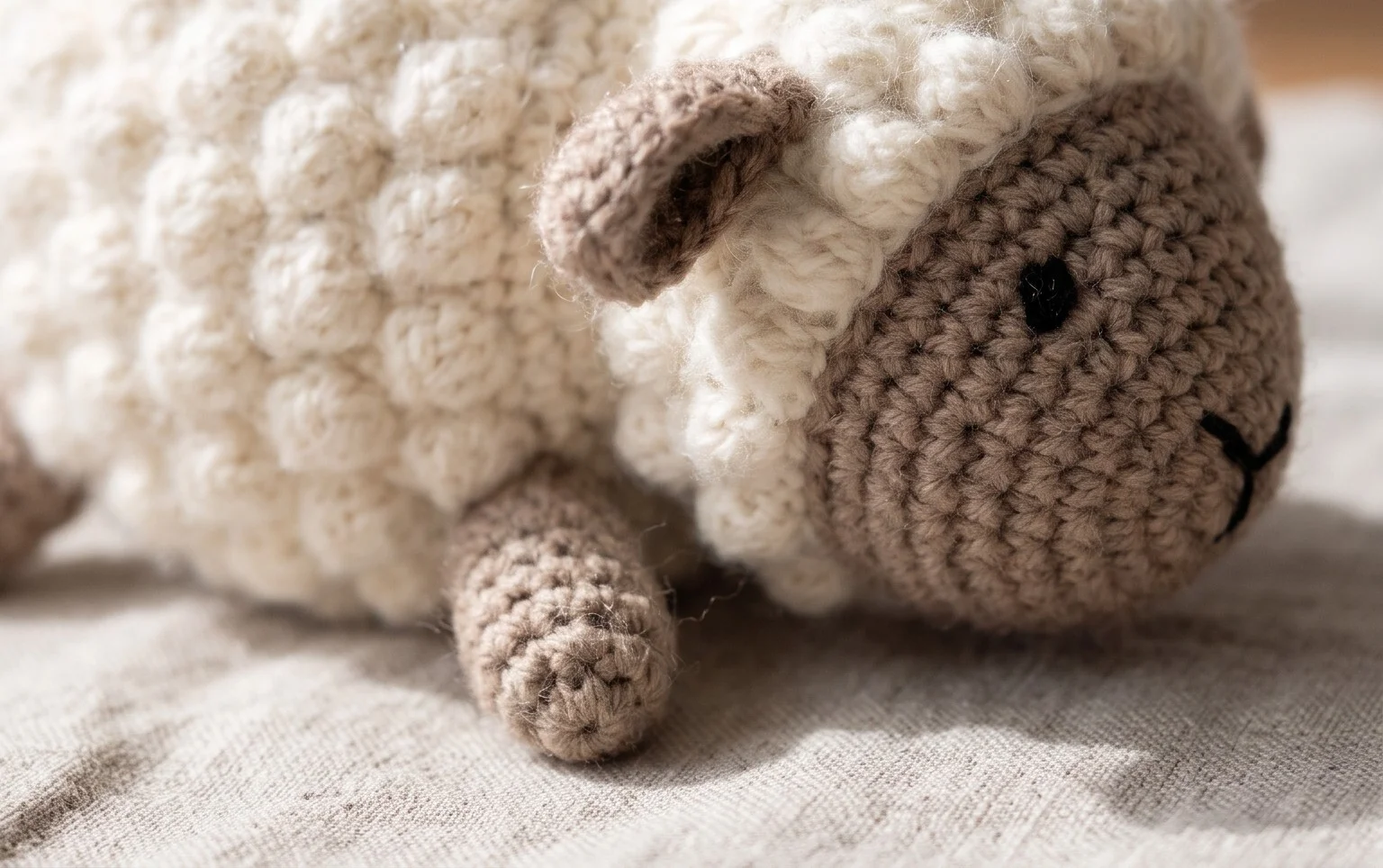
A finished lamb has a soft, rounded shape and a handmade expression that makes the time spent crocheting feel worthwhile. For a simple variation, use pale pink or blue yarn for the body, or choose a smaller hook and finer yarn to make a pocket-sized lamb. Embroidered eyes and facial details keep the finish gentle and let you adjust the expression to suit your gift. When yours is complete, share a photo on Pinterest or your favorite social platform so other makers can see your color choices and finishing touches. Then browse the blog for more free crochet patterns, including small toys and practical projects for your next quiet afternoon.