Free Snowflake Granny Square Crochet Pattern for Beginners
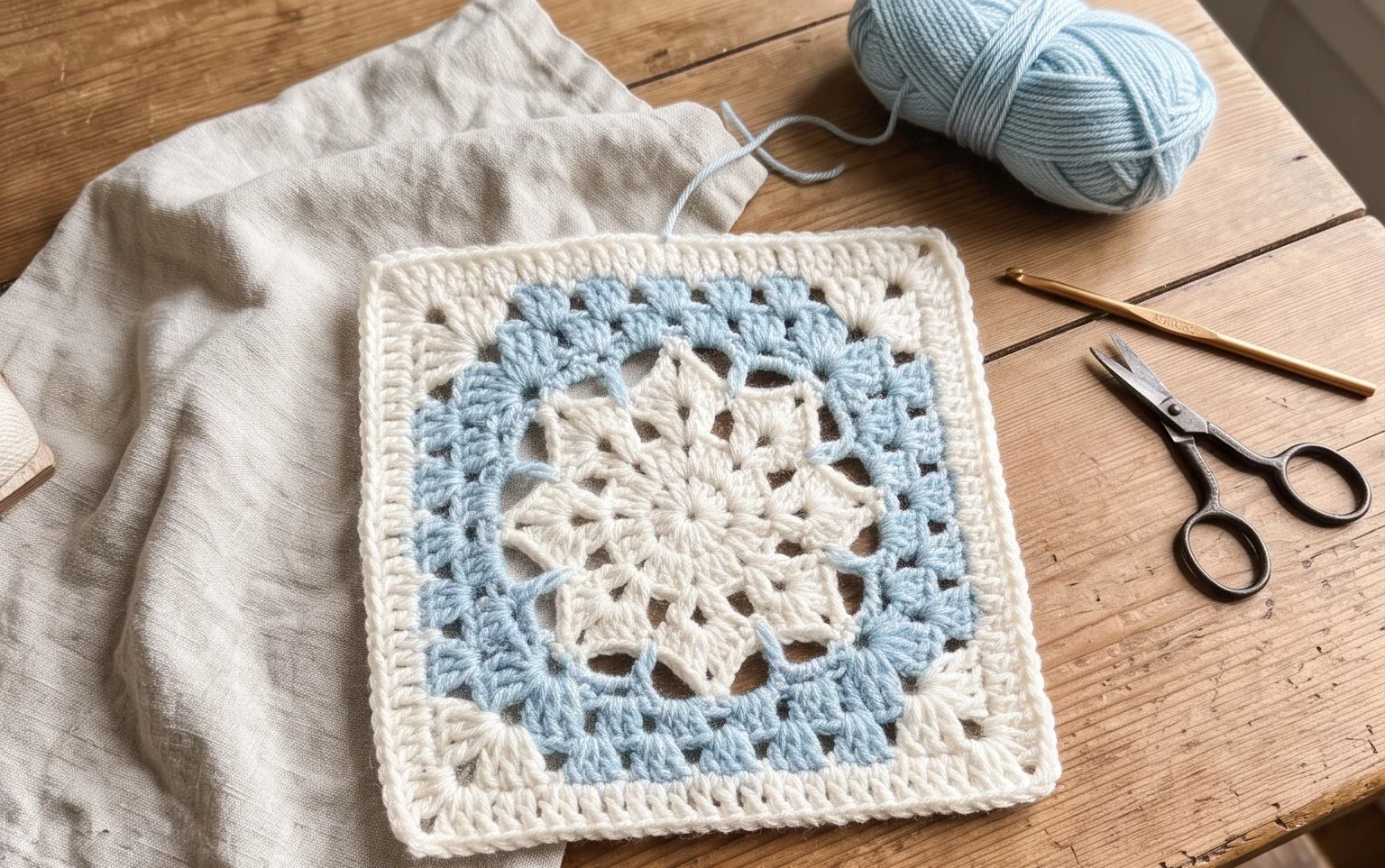
A crisp snowflake sits at the center of this crochet granny square, framed by the familiar open spaces and textured clusters of a classic motif. The finished square has a wintry look that works as a single decoration or as part of a larger blanket, pillow, or seasonal display. Beginners can practice working in rounds and keeping track of stitch groups, while experienced crocheters can enjoy a small project with a clear, satisfying finish. It also makes a thoughtful handmade gift for someone who loves winter decor. The video tutorial helps you follow the pattern as the snowflake takes shape, and the written instructions give you a way to check each round at your own pace. Choose colors that suit your home, or use yarn already in your basket.
Why You’ll Love This Pattern
A firm cotton single-crochet cloth measures about 8 inches square and works well for washing dishes, wiping counters, or keeping beside the sink. The pattern uses one stitch throughout, so it is easy to settle into after the first row.
The straight rows make this a useful first project for practicing even tension and counting stitches. Worsted cotton is absorbent, durable, and easy to wash, and one cloth takes about 100 yards, making it a practical use for leftover cotton yarn. The finished square also makes a handy handmade gift when paired with a bar of soap or a kitchen towel.
The rows were easy to follow, and I liked having a small project where I could see my stitches getting more even as I went.
— Mara, beginner crocheter
Pattern Overview & Skill Level
- Skill Level: Beginner. You will need to chain, single crochet, and turn your work.
- Approximate Time: 2–3 hours, depending on your pace and tension.
- Construction: A flat square worked back and forth in rows, with no separate edging.
- Finished Dimensions & Sizing: About 8 × 8 inches (20 × 20 cm) when blocked, at a gauge of 15 single-crochet stitches and 16 rows per 4 inches (10 cm).
Materials & Supplies Needed
- Yarn: About 100 yards of worsted-weight cotton yarn, also called medium or category #4. Use one color, or change colors at the end of a row if you are comfortable weaving in extra ends.
- Hook Size: 5.0 mm / H-8 crochet hook. If your fabric is loose, try a 4.5 mm hook; if it feels stiff, try a 5.5 mm hook and check the gauge again.
- Notions: Tapestry needle for weaving in the starting and ending tails, scissors, and a ruler or tape measure. A removable stitch marker can help mark the first stitch of a row.
- Substitutions: A different 100% cotton yarn in a similar worsted weight is the closest substitute. Cotton blends may dry more slowly or feel stretchier. Linen yarn can make a firm cloth but may feel rough at first. A thicker yarn or larger hook will make a larger, looser cloth and use more yarn; a thinner yarn or smaller hook will make a smaller, denser cloth.
Stitch Guide & Abbreviations (US Terms)
- ch: Chain.
- sc: Single crochet. Insert the hook into the stitch, yarn over and pull up a loop, yarn over again, then draw through both loops.
- sl st: Slip stitch. Insert the hook into the stitch, yarn over, then draw through the stitch and the loop on the hook.
- st / sts: Stitch / stitches.
- Turning chain: The chain made at the start of a row to bring the hook to working height. In this pattern, it does not count as a stitch.
Step-by-Step Pattern Instructions
Use US crochet terms. Keep the turning chain loose enough that the first stitch of the next row is easy to find. The chain at the start of each row does not count toward the stitch total.
Cloth Body
- Foundation: Ch 31.
- Row 1: Sc in the second ch from the hook and in each ch across. Turn. (30 sts)
- Rows 2–32: Ch 1, sc in each st across, then turn. Repeat this row for every row from 2 through 32. (30 sts each row)
After Row 32, the cloth should measure close to 8 inches wide and 8 inches tall. If it is noticeably wider or narrower, check your stitch gauge before adding more rows. To adjust the height slightly, work fewer or more rows, keeping in mind that each additional row adds about ¼ inch at the stated gauge.
Finishing
Cut the yarn, leaving a tail of about 6 inches. Pull the tail through the last loop to secure it. Thread the tail onto a tapestry needle and weave it through the backs of several stitches, changing direction once so it is less likely to work loose. Weave in the foundation tail the same way. Wet the cloth, gently press out excess water without twisting it, and lay it flat to dry with the sides squared.
Care & Washing Instructions
- Wash cotton cloths in warm water, up to about 40°C (104°F), with similar colors; follow the yarn label if it gives a lower limit.
- Dry flat or tumble-dry on low if the yarn label allows it; reshape the edges while the cloth is damp.
- Block by smoothing the cloth flat and lining up the corners; avoid stretching the stitches wider than the finished measurement.
Pro Tips & Common Mistakes to Avoid
- Check your tension after the first several rows. If the fabric curls or feels board-like, try a larger hook; if the stitches look loose and gappy, try a smaller hook.
- Count the 30 stitches at the end of each row. Place a stitch marker in the first stitch if you tend to miss the last stitch near the turning chain.
- Keep the first and last stitches clear. The turning chain does not count, so work the final single crochet into the last actual stitch, not into the chain below the hook.
- To change the size, add or remove foundation chains for width and rows for height. Every extra foundation chain adds roughly ⅔ inch at the stated gauge, and a wider or longer cloth uses more yarn.
Frequently Asked Questions
Can I use acrylic yarn instead of cotton?
You can, but acrylic is less absorbent and may not work as well for wiping dishes. If you use it, check the care label and expect a softer, potentially stretchier cloth. Make a small gauge swatch first because the finished size may change.
How do I make the cloth smaller or larger?
For a narrower cloth, begin with fewer chains; for a wider cloth, begin with more. Keep an even number of single-crochet stitches across and work rows until the height is close to the width. Larger dimensions require more yarn, while smaller dimensions use less.
Is this pattern suitable for a first crochet project?
Yes. It uses a foundation chain and single crochet in straight rows, with no shaping or joining. The main challenge is keeping 30 stitches in every row, so count before turning until the edges become easier to recognize.
Can I sell cloths made from this pattern?
Check the designer’s terms before selling finished items, especially if the pattern came from a published source. If you sell them, describe the yarn and care instructions accurately and do not claim the pattern itself as your own.
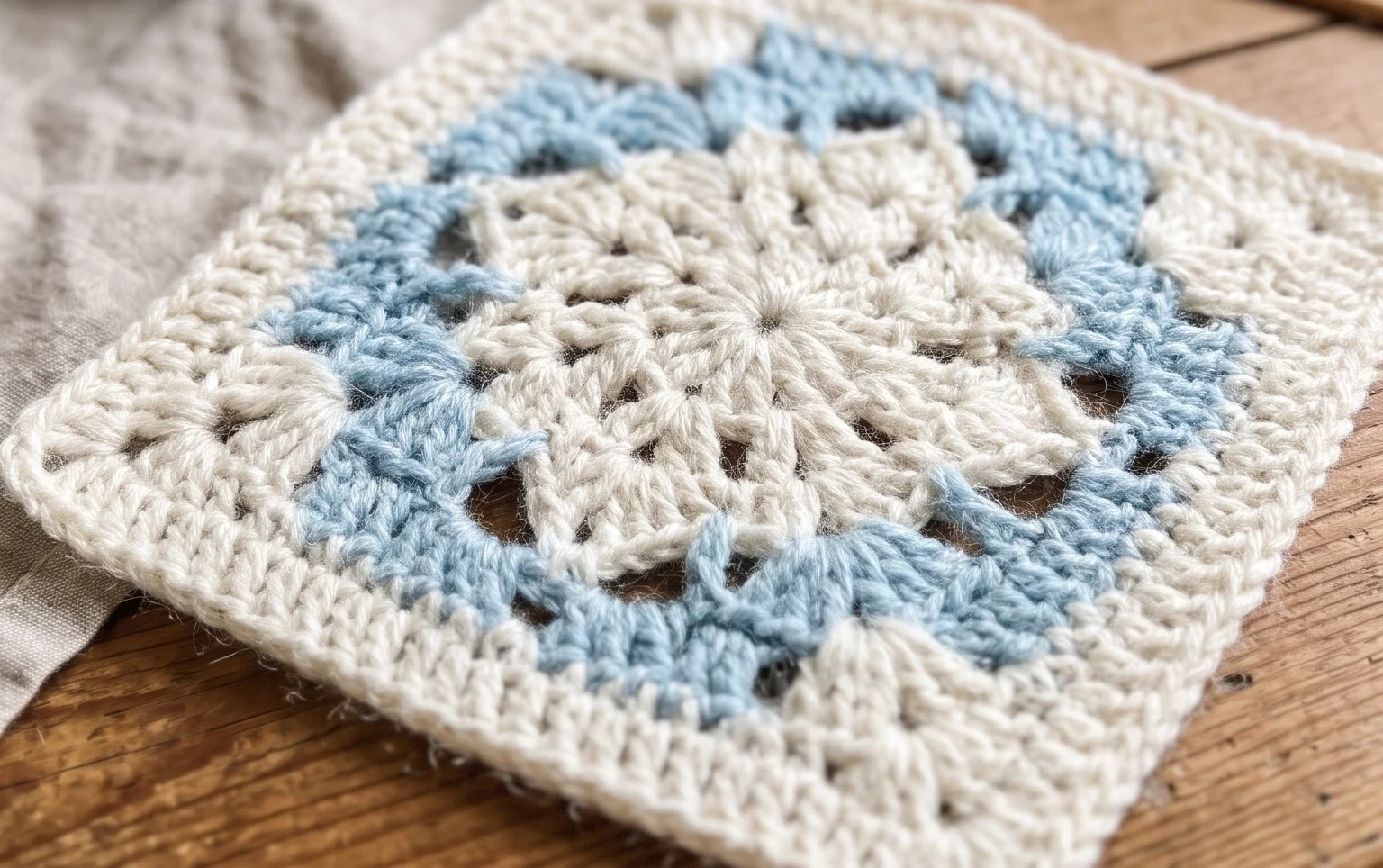
When the last round is finished, you’ll have a neat square with a snowflake at its center and plenty of ways to use it around the house. For a simple variation, work the snowflake in white and the surrounding rounds in a deep blue or green; changing just one color gives the motif a different feel without changing the pattern. If you make a square, share a photo on Pinterest or your favorite social media account so other crocheters can see your colors and finished size. You can also browse the blog for more free crochet patterns, from small seasonal projects to motifs you can join into blankets and other home pieces.